Asset Categories
The System Data > Asset Category Data tab > Asset Categories sub-tab lists all of the existing asset categories.
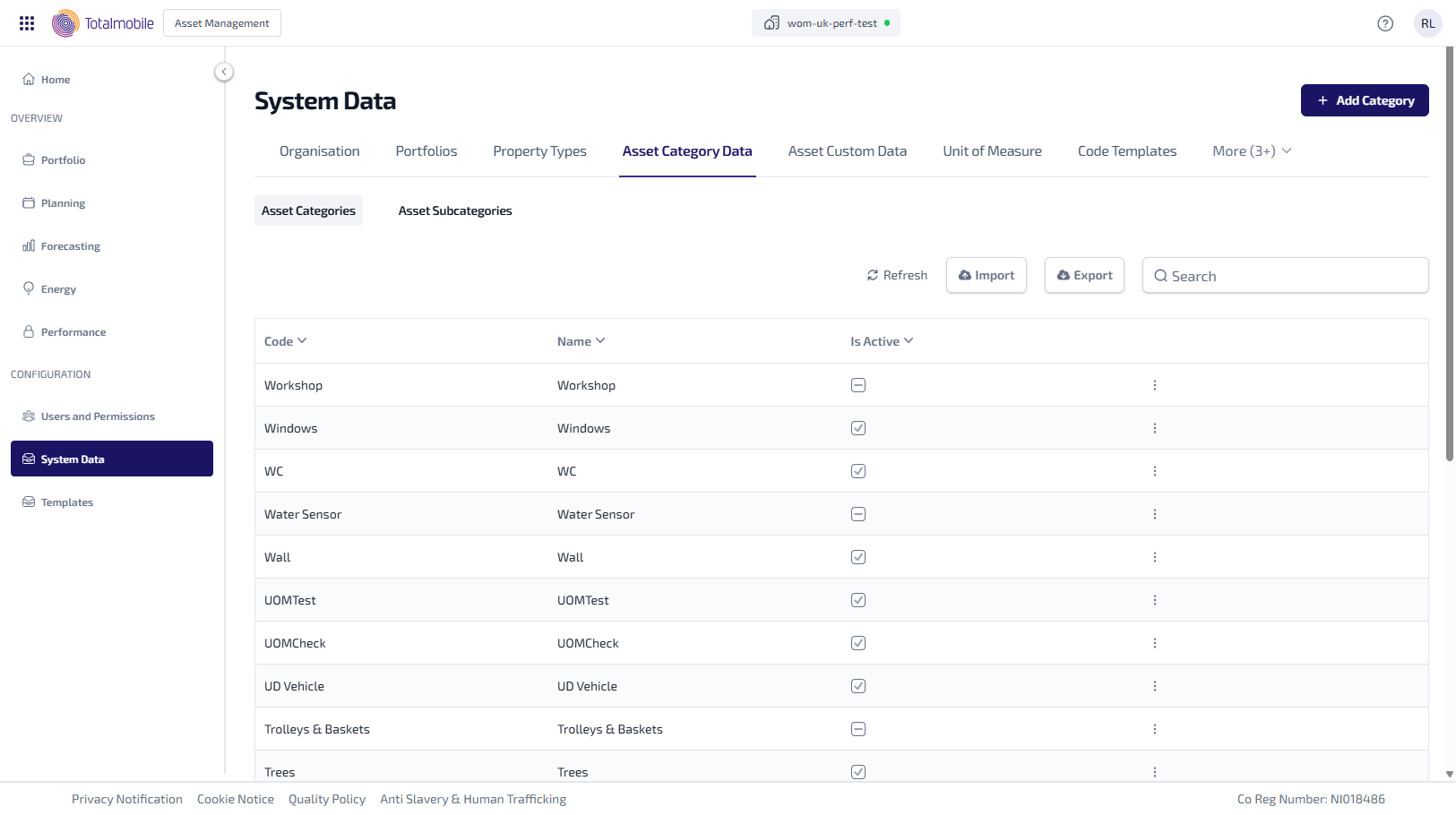
The following information is shown:
-
Code – the unique code for the asset category.
-
Name – the name of the asset category.
-
Is Active – indicates whether the asset category is currently available to be assigned to assets and asset subcategories.
-
 - the asset category is available to be assigned to an asset or asset subcategory.
 -
 - the asset category is not available, and hidden from assets or asset subcategories.
-
-
 More options - select for the following options:
-
Edit - select to edit the asset category.
-
Delete - select to delete the asset category.
Asset categories can only be deleted if they are not linked to an asset, or asset subcategories. If the asset category is in use, delete will be disabled.
You can also do the following in Asset Categories:
-
Add Asset Category - add a new asset category.
-
Edit Asset Category - edit an existing asset category.
-
Refresh - select to refresh the information shown on the page.
-
Import - select to import multiple asset categories from a .csv file.
-
Export - select to export the asset categories as a .csv file.
-
Search - enter a full, or partial, Code or Name into the Search and press Enter on the keyboard to display all matching results in Asset Categories.
The Search is a ‘begins with’ search, therefore ensure the criteria entered is always the beginning of what you are searching for.
-
Add Asset Category
To add a new asset category:
-
In the Navigation menu, in the Configuration section, select System Data.
-
Select the Asset Category Data tab.
-
In the Asset Categories sub-tab select Add Category.
-
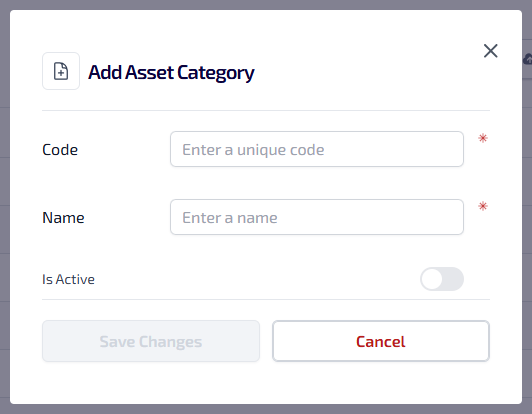
The Add Category dialog appears.
-
Enter the following information:
-
Code* - the code entered must be unique, can be alphanumeric, contain symbols and have a maximum 64 character limit.
-
Name*
-
Select the toggle to indicate whether the asset category Is Active.
*These are required fields.
-
-
Select Save Changes.
Edit Asset Category
To edit an existing asset category:
-
In the Navigation menu, in the Configuration section, select System Data.
-
Select the Asset Category Data tab.
-
In the Asset Categories sub-tab, for the asset category you want to edit, select More options
. -
From More options select Edit.
-
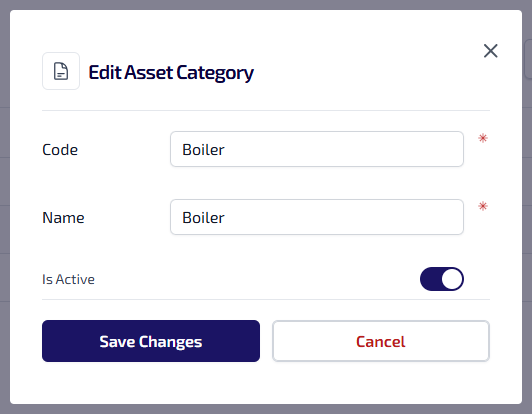
The Edit Category dialog appears.
-
Update the following details as required:
-
Code
-
Name
-
Is Active - indicates whether the asset category is available for assets and asset subcategories.
-
-
Select Save Changes.
Import
The Import lets you add multiple asset categories by importing them as a .csv file.
The .csv file must contain the following columns:
|
Column Name |
Description |
Validation Rules |
|---|---|---|
|
Code |
The unique code for the asset category. |
Mandatory. This must be unique among all active asset categories. |
|
Name |
The name of the asset category. |
Mandatory. This field cannot be empty. |
|
IsActive |
Indicates whether the asset category is available for assets and asset subcatergories. |
Optional. Accepted values are True or False. This defaults to False if not provided. |
To import an asset categories file:
-
In the Navigation menu, in the Configuration section, select System Data.
-
Select the Asset Category Data tab.
-
In the Asset Categories sub-tab select Import.
-
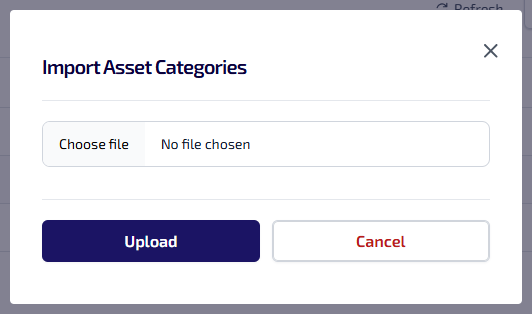
The Import Asset Categoriesdialog appears.
-
Select Choose file, browse and select the required file to import, select Open.
-
Select Upload.
If any asset categories in the .csv file fail the validation check, due to a missing name or duplicate code etc., they will be skipped, and all valid asset categories will be imported successfully.
Export
The Export lets you export the asset categories as a .csv file. the following options are available:
-
All Asset Categories - exports all asset categories.
-
Only Active Asset Categories - exports all the asset categories on the current page with Is Active selected.
-
Your Exports - shows all your in progress and completed exports.
To export an asset categories file:
-
In the Navigation menu, in the Configuration section, select System Data.
-
Select the Asset Category Data tab.
-
In the Asset Categories sub-tab select Export, and select either All Asset Categories or Only Active Asset Categories from the context menu.
-
The export is started and progresses in the background. Select Export, and select Your Exports from the context menu.
-
The Your Exports dialog appears.
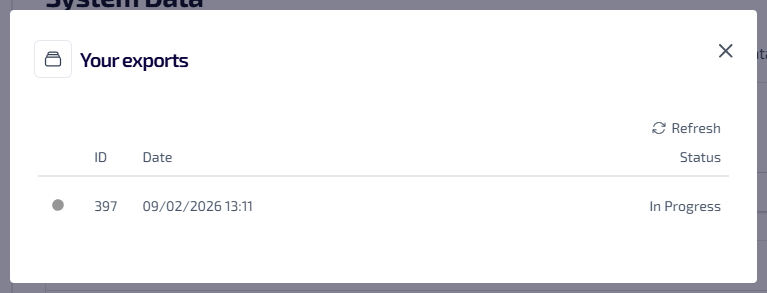
This lists all of your exports which are in progress or completed. the following information is shown:
-
ID - the system generated identification number.
-
Date - the date and time the export started.
-
Status - the status of the export, which could be one of the following:
-
In Progress
-
Completed
-
-
-
Once the export is complete expand
 the section to view the URL.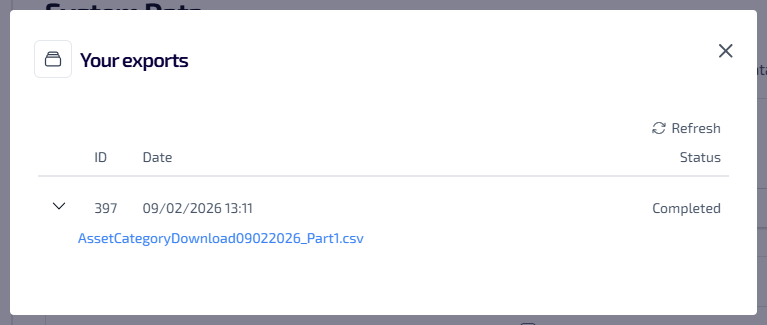
-
Select the URL to download the asset categories file to your browser download folder.
Once the export is downloaded to your browsers download folder, it is removed from the Your Exports dialog.
Please note the following:
-
You can only view your own exports.
-
If the file is not downloaded within 7 days it will be deleted automatically.
-
Each file contains up to 10,000 rows.
-
If your export contains more than 10,000 rows it will be split into multiple files.